Religious Freedom Cases to Watch This Year: A Plain-English Explainer
Religious liberty disputes rarely announce themselves. They arrive as a zoning vote, a scheduling conflict, a contract a city declines to renew, or a letter telling a teacher her job has ended. By the time a case reaches a courtroom, the people involved have usually spent months trying to resolve something that felt obvious to them and complicated to everyone else.
What follows is a plain-English guide to the kinds of religious freedom fights moving through courts and statehouses now: what each dispute actually concerns, who ends up affected, and how to follow along without drowning in procedural language. This is general information, not legal advice. If you are personally in the middle of one of these disputes, talk to a lawyer licensed in your state, and do it early.
The Legal Backdrop: Smith, RFRA, and Why State Capitols Matter
Most federal religious liberty claims rest on two things and one 1990 decision. In Employment Division v. Smith, the Supreme Court ruled that a neutral, generally applicable law does not violate the Free Exercise Clause even when it burdens religious practice. The case involved two men fired from drug counseling jobs after using peyote in a Native American Church ceremony, and it narrowed the protection available to believers across the country.
Congress responded in 1993 with the Religious Freedom Restoration Act, which says government cannot substantially burden religious exercise unless it proves a compelling interest and uses the least restrictive means. A 1997 ruling held that the federal RFRA does not bind states and cities, which is why many states have passed their own versions. That gap is where much of the action sits: a congregation's fight with a county zoning board is usually a state RFRA or state constitutional question, not a federal one.
Work and Worship: Accommodation After Groff
Title VII of the Civil Rights Act requires employers with fifteen or more employees to reasonably accommodate an employee's religious beliefs and practices unless doing so would cause undue hardship. For decades, courts treated "undue hardship" as almost any cost at all. In 2023, the Supreme Court's unanimous decision in Groff v. DeJoy raised that bar, holding that an employer must show the burden is substantial in the overall context of the business.
The practical result: more cases about Sunday shifts, prayer breaks, beards, head coverings, and dress codes, especially in health care, retail, delivery, and other shift-based work. If you are the one making a request, a few habits help:
- Put the request in writing, and name the specific practice you need accommodated.
- Propose one or two workable alternatives instead of only saying no.
- Keep copies of every message and note the dates.
- Watch for whether your employer cites concrete costs or only hypothetical ones.
Church Autonomy and Who Counts as a "Minister"
Since Hosanna-Tabor in 2012 and Our Lady of Guadalupe in 2020, courts have applied a "ministerial exception" that keeps judges out of employment disputes between religious bodies and the people who carry out their religious mission. The second case mattered because it extended the exception to teachers at religious schools whose job titles said "teacher," not "minister."
These cases turn on function more than title: does the role involve teaching the faith, leading worship, or shaping doctrine? Who is affected is narrower than headlines suggest, and the stakes are high for both sides. A religious school that loses the argument faces a discrimination suit on its hiring decisions. An employee who loses it may have no remedy at all.
Public Schools: Chaplains, Prayer, and Opt-Outs
The 2022 decision in Kennedy v. Bremerton School District sided with a football coach who prayed at midfield after games, and districts across the country have been revising policies ever since. The harder questions now are about where private religious expression by a school employee ends and school-sponsored religious activity begins, since that line determines what is permitted.
Separately, a handful of states have passed laws allowing chaplains to serve in public schools as counselors or volunteers. Supporters point to shortages of trained mental health staff; critics worry about untrained adults in confidential conversations with minors, and about whose faith gets represented. Parents who want clarity should ask the district three questions: who supervises chaplains, what training they receive, and how a family opts out. Get the answer in writing.
Foster Care, Adoption, and Faith-Based Providers
In Fulton v. City of Philadelphia, a unanimous Supreme Court found that the city violated the Free Exercise Clause when it stopped contracting with a Catholic agency that would not certify same-sex couples. Because the ruling turned on specific details of the city's contract, it did not settle the broader question, and legislative fights have continued in several states over whether religious agencies can receive public funds while declining some applicants.
Three groups feel the outcome. Children waiting for placement. Prospective parents who are LGBTQ, of another faith, or otherwise outside an agency's criteria. And small agencies that may close rather than change a policy they consider non-negotiable.
Zoning, Prisons, and Congregations Without Clout
The Religious Land Use and Institutionalized Persons Act, passed in 2000, protects religious exercise in two places people rarely associate with each other: local land-use decisions and prisons. On the zoning side, the recurring fact pattern is a small congregation, storefront church, mosque, or synagogue that gets denied a permit or buried in parking requirements its budget cannot meet. Courts ask whether the burden on religious exercise is substantial and whether the rules treat religious assemblies worse than comparable secular ones.
If your congregation faces a denial, timing matters more than outrage. Appeal deadlines can be short, sometimes measured in days. Keep a clean record: the application, the minutes, the emails, the reasons given. Those documents often decide the case.
Conscience Rules and Compelled Speech
A third cluster involves people who say the law is asking them to participate in something their faith forbids. That includes health care workers and religious hospitals raising objections to certain procedures, insurers and employers contesting coverage mandates, and business owners in expressive trades. In 303 Creative v. Elenis, the Supreme Court ruled that Colorado could not force a web designer to create wedding sites for same-sex couples, framing the question as compelled speech rather than refusal of service.
Lower courts are now sorting out where genuinely expressive work ends and an ordinary commercial transaction begins. Where the line lands will affect photographers, florists, designers, bakers, and the customers who walk through their doors.
How to Follow These Cases Without Getting Lost
Court coverage rewards drama and skips the parts that determine outcomes. A few habits will keep you better informed than most commentary:
- Read the ruling, not just the press release. Even a short opinion usually explains the reasoning in plain terms.
- Know the posture. Filed, appealed, cert petition, cert granted, argued, decided — a grant of review is not a decision.
- Check the remedy. A narrow ruling that applies to one plaintiff leaves the national picture unchanged.
- Watch your own state. Many of the most consequential rules are set by legislatures and city councils, not federal courts.
- Ask your congregation's leaders what policies they have on hiring, facility use, and outside groups. Knowing before a conflict arises is worth more than a lawyer's opinion after.
These disputes will keep coming, because they sit at the intersection of two things Americans hold tightly: religious conviction and equal treatment under the law. Keep the details straight, and you can hold your own in the conversation.
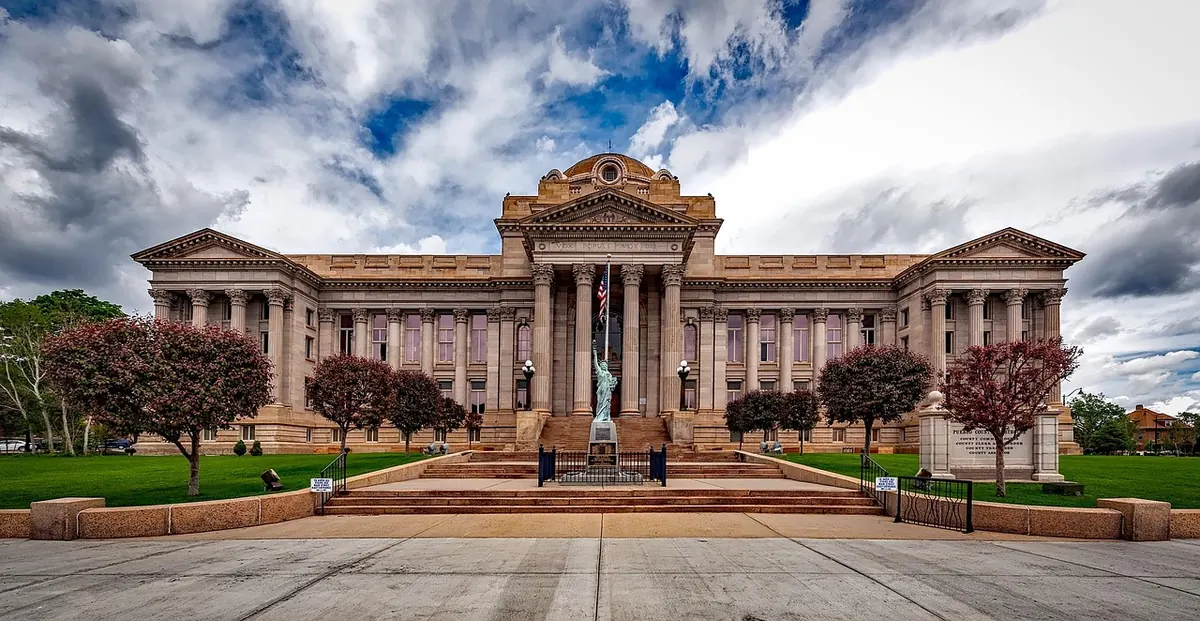
Photo: 12019 / Pixabay