The Real Difference Between Luck and Skill in Online Casino Games
Every experienced gambler eventually hears the same tired line: "The house always wins." It's true enough at a macro level, but it obscures something far more interesting. Within that overused phrase lies a spectrum that ranges from games where you are almost entirely at the mercy of a random number generator to those where a patient, disciplined player can genuinely tip the odds. Understanding where each game falls on that spectrum is the first real step from being a casual punter to someone who plays with intent.
Let's break down the actual mechanics behind the games you're likely playing, why some reward skill and others simply don't, and where the smart money tends to concentrate its attention.
Slots: Pure Variance Wrapped in Neon
Let's start with the elephant in the room. Slots are the casino's cash cow for one simple reason: they are almost entirely luck-based. There's no decision you can make mid-spin that changes the outcome of that spin. You pick a stake, you press the button, and the RNG does the rest. The only genuine strategic choices happen before you ever spin.
That doesn't mean slots are a hopeless pursuit. It means the skill lies in selection, not execution. Here's where knowledgeable players focus:
- RTP (Return to Player): This is the percentage of all wagered money a slot pays back over millions of spins. A game with a 96.5% RTP is fundamentally better than one with 94%, assuming equal variance. That 2.5% edge difference is enormous over time.
- Volatility: High-volatility slots pay rarely but potentially huge. Low-volatility slots pay frequently but small. Your bankroll size should dictate which you choose. A $50 bankroll on a brutal high-variance slot is a recipe for a five-minute session.
- Jackpot type: Fixed jackpots are predictable. Progressive jackpots often come with a lower base RTP because a slice of every bet feeds the prize pool. Know which you're playing.
A concrete example: a player who exclusively seeks 97% RTP slots and never touches anything below 95% is, over 10,000 spins, giving the house roughly half the theoretical edge of a player who picks games at random. That's not luck. That's discipline masquerading as strategy.
Poker: The Last True Skill Game
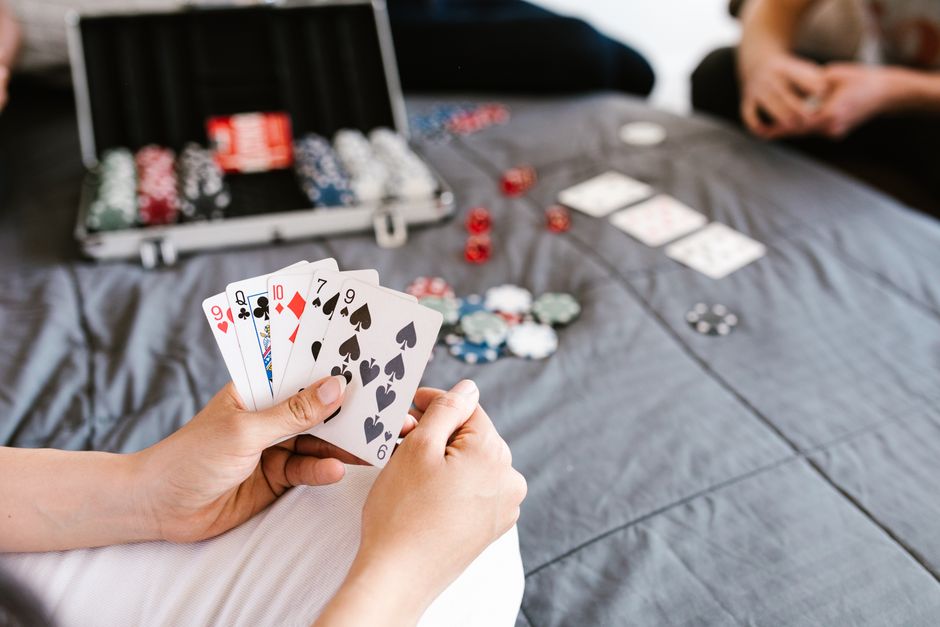
If slots are the casino floor's lottery, poker is its chessboard. This is the one game in the building where you are not playing against the house; you're playing against other people, and the house simply takes a rake. That single structural fact changes everything.
In Texas Hold'em, a strong player can realistically expect a long-term win rate measured in big blinds per hundred hands (bb/100). A good cash game player might sustain 3 to 8 bb/100. A great one might hit double digits. The variance is brutal in the short term, but edge compounds. This is fundamentally different from any house-banked game.
What actually separates winning poker players from losing ones?
- Position awareness: Acting last gives you more information. It's the single most underrated concept for beginners.
- Range thinking: Amateurs put opponents on specific hands. Pros put them on ranges of hands and assign probabilities.
- Bankroll management: Even the best player goes broke with poor bankroll discipline. The standard advice of 20 to 30 buy-ins for cash games exists for a reason.
- Emotional control: Tilt destroys more bankrolls than bad beats ever will.
If you want a game where your decisions genuinely matter, poker is where you go. But be honest with yourself. Most people who think they're winning players are, in fact, slightly losing players who've had a good month. More background can be found at studying computer science in the UK.
Blackjack and the Myth of Card Counting
Blackjack sits in an awkward middle ground. Basic strategy, a mathematically optimal way to play every hand based on the dealer's upcard and your own, can reduce the house edge to around 0.5% on a good rules set. That's a remarkable number. Most casino games sit between 2% and 8%.
But here's where it gets complicated. The famous card-counting strategies popularized by movies work, but they require:
- Deep penetration (the dealer dealing most of the shoe)
- Favorable rules (3:2 blackjack payouts, dealer stands on soft 17, double after split allowed)
- Bet spreading that doesn't get you flagged
- Enormous patience
Modern casinos have largely neutralized counting with continuous shuffling machines and 6:5 payout tables. If you sit at a 6:5 table, you've already given back most of your edge. So yes, blackjack is more skill-influenced than slots, but the practical ceiling for most recreational players is simply playing perfect basic strategy and finding the best rules available.
Where Skill Actually Lives in Sports Betting
Sports betting is often lumped in with casino games, but it's a different animal entirely. The bookmaker sets a line, and your job is to decide whether that line is wrong. If you consistently identify mispriced lines, you win. If you don't, the vig eats you alive.
Professional bettors think in terms of closing line value. If you consistently bet numbers better than the closing line, you're likely a long-term winner, even if short-term results look ugly. This is a genuinely skill-driven market, but it's also ruthlessly efficient. The vast majority of recreational bettors lose, and they lose slowly enough that they don't notice.
A useful mental model: the casino games are entertainment with a known cost. Poker and sports betting are competitive markets where you're trying to out-think opponents or the market itself. Confusing the two is how people make expensive mistakes.
The Takeaway: Play the Games That Reward You
If you enjoy slots, enjoy them for what they are: a beautifully engineered form of entertainment with a fixed, predictable cost over time. Pick high-RTP games, manage your bankroll, and treat every session as the price of admission.
If you want your decisions to matter, invest your time in poker or sports betting. But understand that these aren't easier paths. They're harder. The skill ceiling is high, which means the competition is fierce, and the learning curve is steep and expensive.
The honest truth is that most players would be better off financially playing low-stakes slots with a strict budget than trying to become a winning poker player. But for those who genuinely put in the work, there remains a small, real, and thoroughly earned edge available in skill-based games. Know which game you're actually playing before you sit down.